

EL Little Lulu - Starry Night
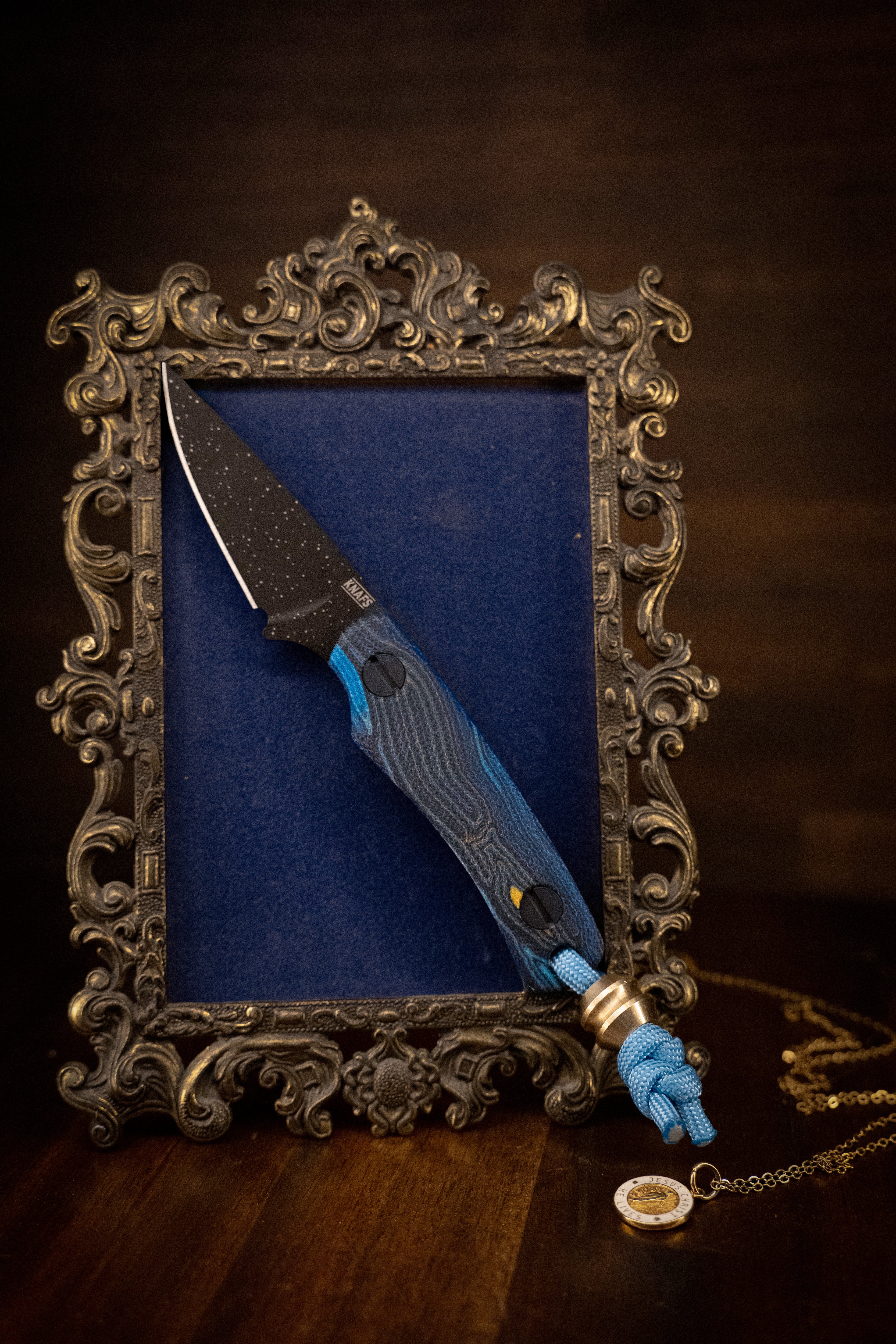
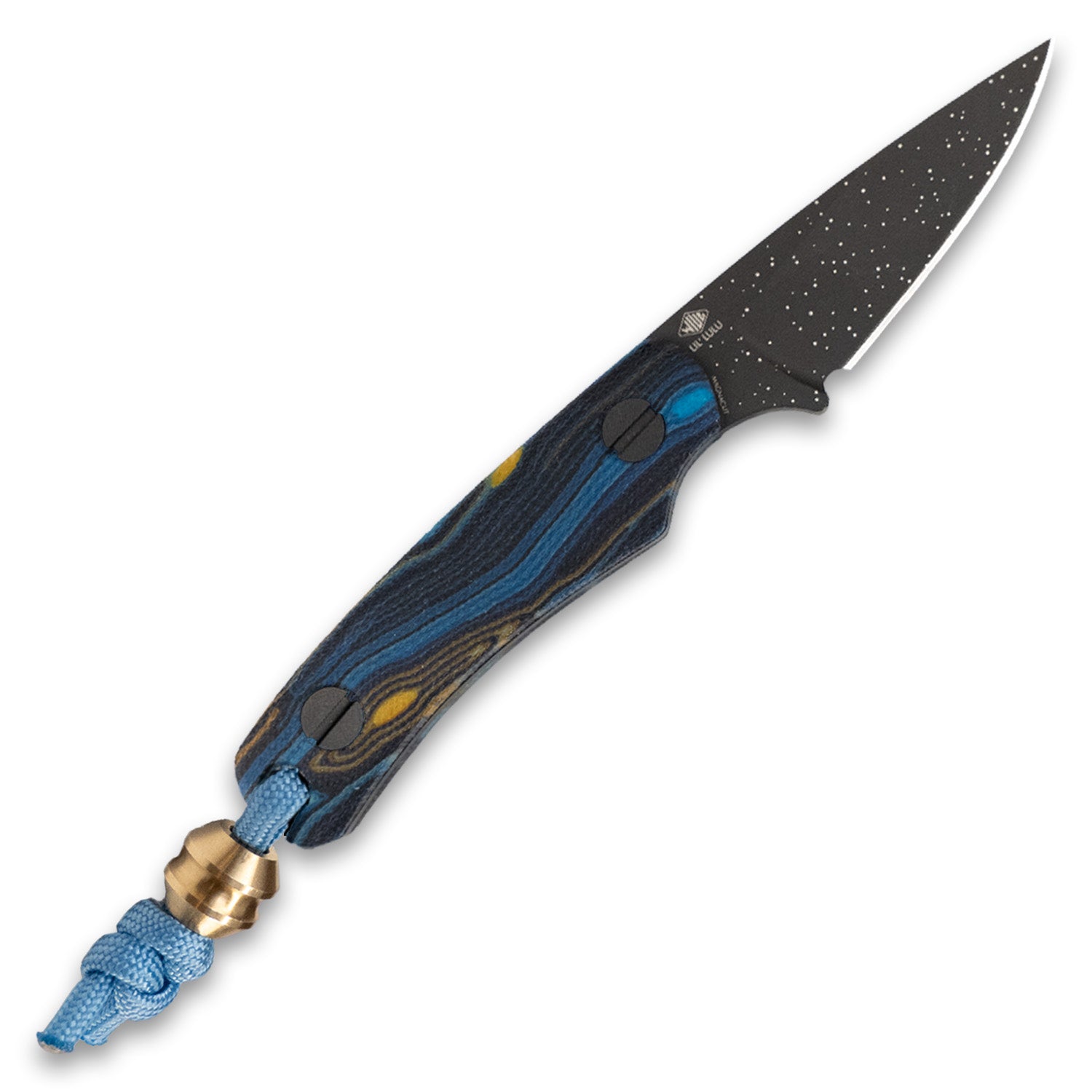
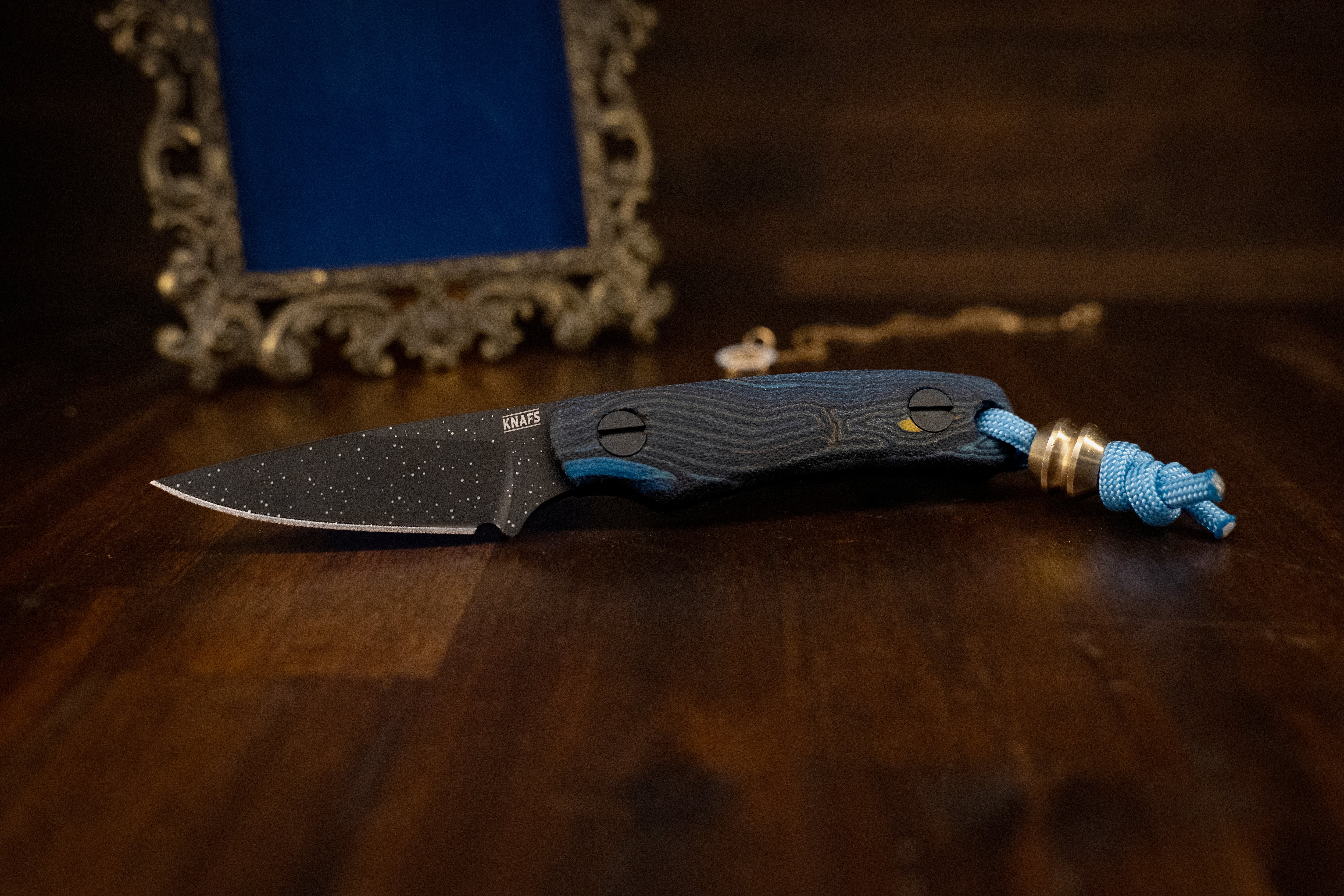
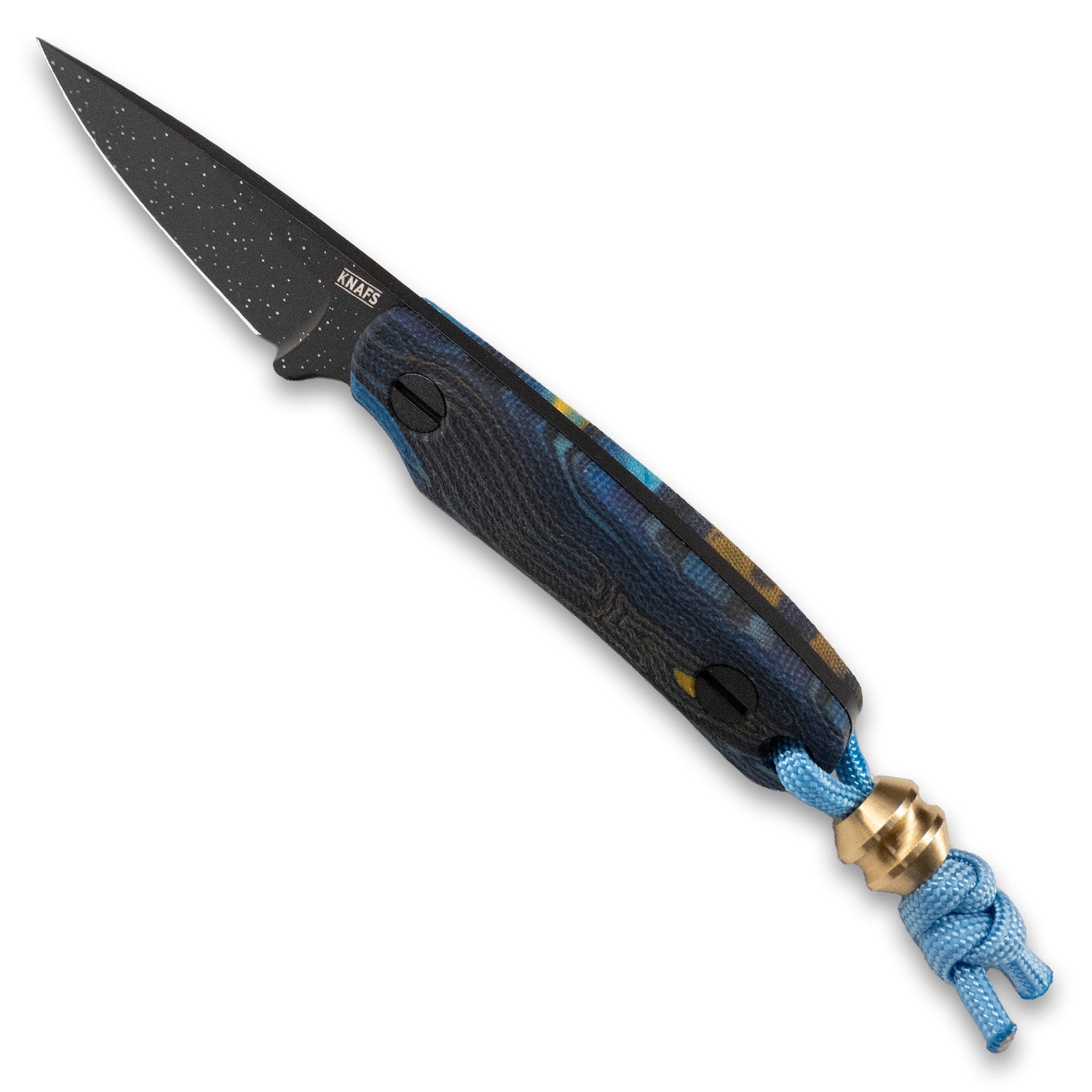
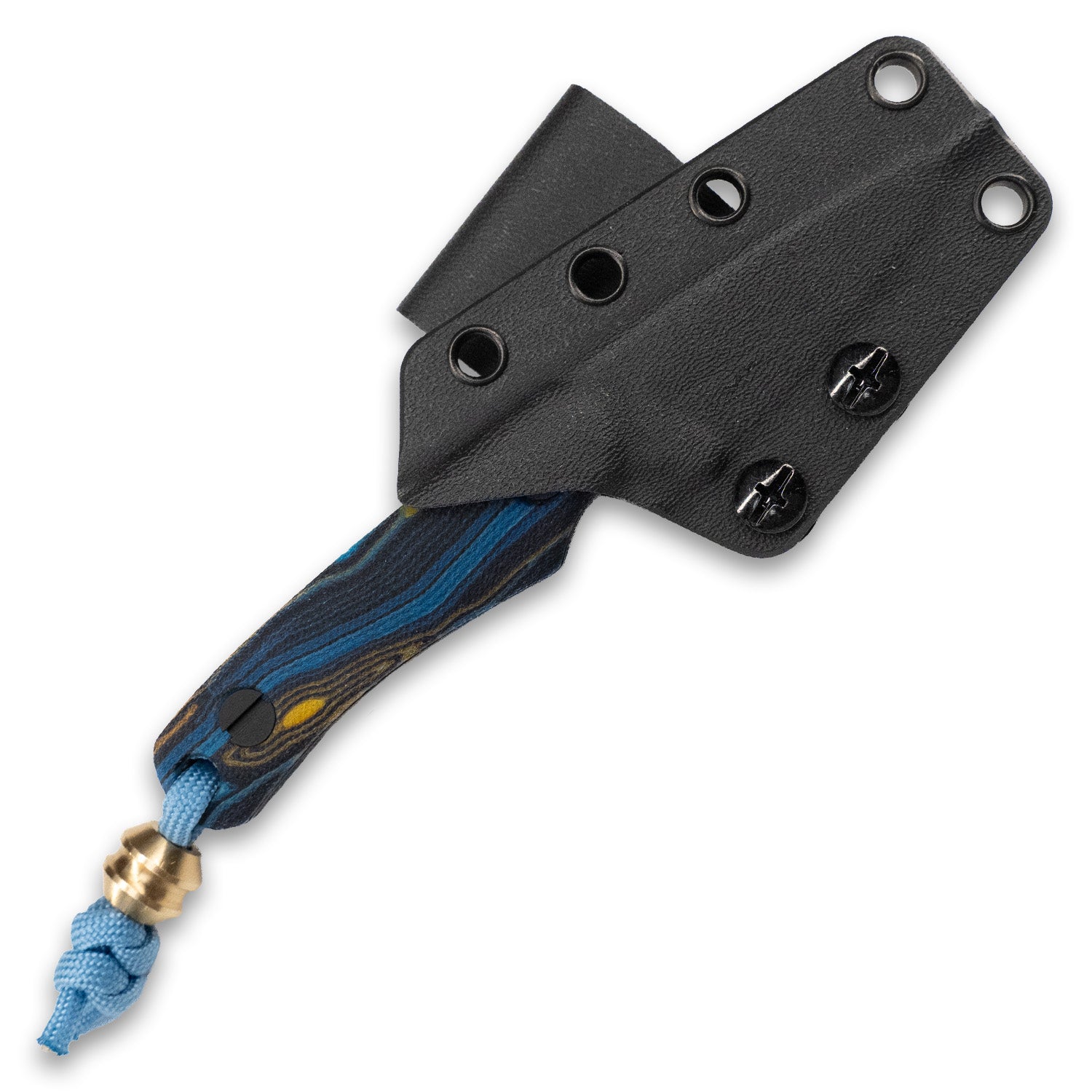
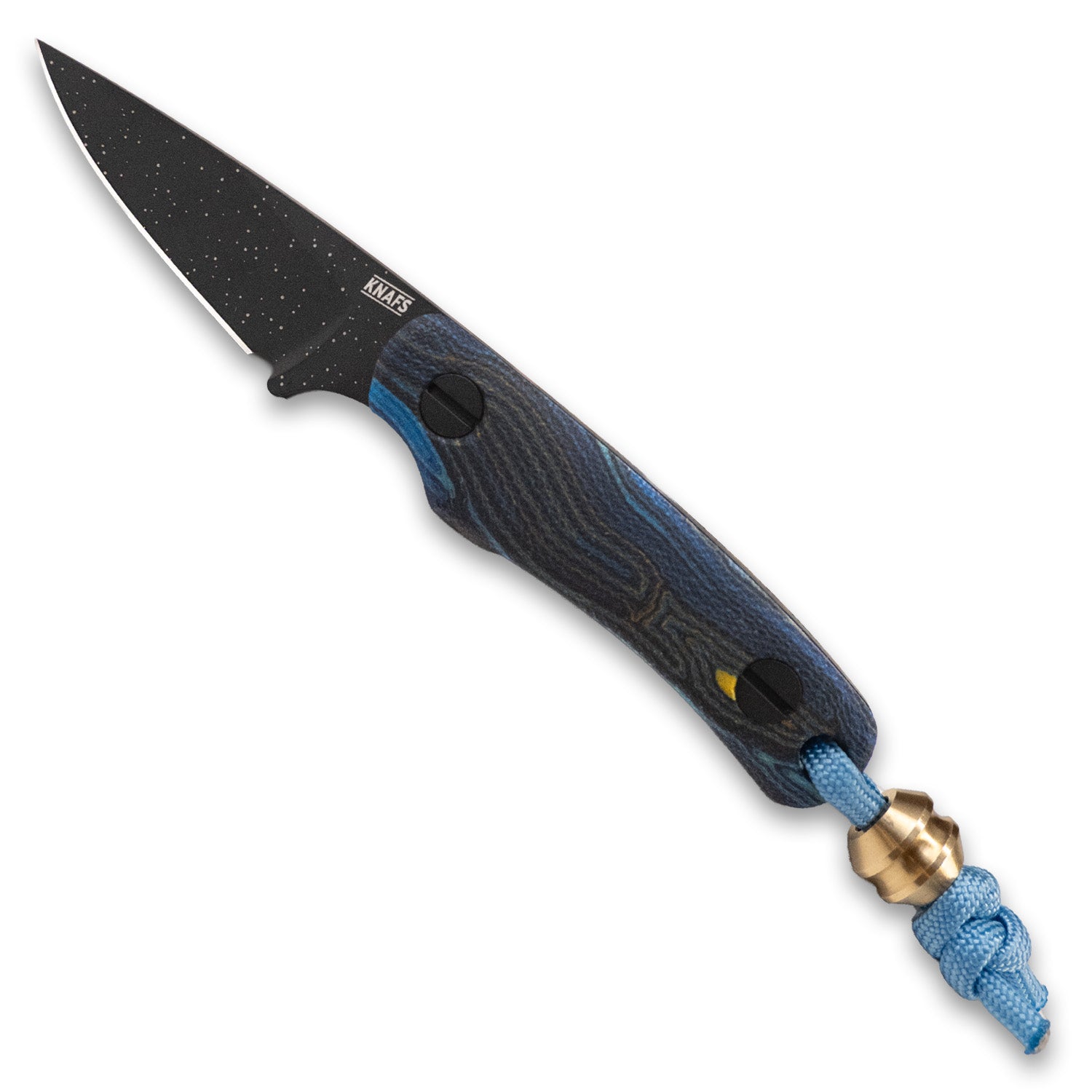
Meet the Little Lulu Starry Night — same rugged little fixed blade you already know, dressed for a night sky.The blade wears a deep Cerakote black finish with an engraved scatter of stars — a fixed constellation, laser-etched into every single one. But the handle? That's where things get interesting. Each Little Lulu Starry Night is fitted with Gicarta scales pulled from its own unique run — layered, textured, and colored like a Montana midnight bleeding into blue. No two handles are alike, so the one in your hand is the only one like it, anywhere.Everything else that made the Little Lulu the Little Lulu is still here. The compact 1.9" MagnaCut blade. The drop point that's happy to feather a stick or break down a box, and smart enough to know it's not chopping firewood or fighting off a grizzly. The Kydex sheath. The whole gateway-to-adventure spirit that started with Ben stuck in the Amazon jungle, borrowing knives, sketching something better.We named the original after Lulu Pass, Montana — a stubborn, beautiful, unforgiving place where pine trees grow sideways out of rock just to survive. The Starry Night version is that same fight, just cast against a sky. Because even in the roughest terrain, on the darkest nights, there's still something worth looking up for.Get one, and you're getting a knife with its own patch of sky — and a handle nobody else will ever have. Paired with a brass bead and light blue lanyard. G-Carta pattern and coloring will vary between knives.
Drop Point
G-Carta
CPM MagnaCut
Flat
1.9” (48.3 mm)
5.2” (132.0 mm)
.125" (3.18 mm)
.67" (17 mm)
1.8 oz (51g)
Black Cerekote
63-64 HRC
Made in USA of Domestic and Foreign Parts
KNAFS-00733
The Little Lulu is the first knife we’ve ever made in-house at Knafs—and yeah, we’re still not over it. It’s the result of three years of dreaming, learning, and finally pulling the trigger on our own CNC mill. We teamed up with our buddy Alan (a manufacturing engineer by day, garage mad scientist by night) and went all in on figuring out the whole process: milling, grinding, sourcing, heat treating, sharpening, assembling. We built a tiny knife ecosystem and started making blades ourselves—from scratch. Every detail of this knife carries our fingerprints, and the amount of love and grit in this thing is hard to overstate.
So… is it Made in USA? Technically, no. It’s “Made in USA of Domestic and Foreign Parts.” That’s the legal way to say: we did all the hard stuff here, but thanks to some super strict FTC standards (think “all or virtually all” of the parts made in the U.S.), we can’t claim it. Let's break that down, according to the parts on this knife:
•Steel: MagnaCut steel is currently made in USA. However, the parent company Crucible went through bankruptcy and is now owned by the French company Erasteel. Some of the processing on powder metallurgy steel happens in Sweden. This does not meet the "all or virtually all" standard of "Made in USA." However, the steel is rolled, laser cut, milled, ground, stonewashed, and laser engraved in the USA. This is a qualified claim of "Made in USA of Domestic and Foreign Parts."
•Hardware: Sourced from McMaster-Carr (a big 'ol American company) and made in China. The screws and standoffs are not Made in USA.
•Micarta: Sourced from Masecraft, an American company that sources micarta assembled in the USA from domestic and foreign parts. Masecraft told us the components (resin and linen fabric) come from three different countries. This is a qualified claim of "Made in USA from domestic and foreign parts."
•Kydex: sourced from Knife Kits, an American company selling Kydex, a thermoplastic product. Here's what we learned about their origin claim: KYDEX® Thermoplastic sheet cannot be stated as “Made in USA”. As with most plastic materials, there are some components that cannot be sourced in the USA and have to be purchased from foreign sources. For example, tin stabilizer is a common component which has not been mined and smelted in the US since the late 1980’s, early 1990’s. So critical components like this can only be obtained by foreign sources. What we can state is that KYDEX® Thermoplastic sheet is “Manufactured in USA with a minimum of 90% domestic content”.
•Sheath Grommets: made in China.
•Sheath Screws and Hardware: sourced from Ulticlip.
•Box: sourced from Flexpack in Woods Cross, Utah. Made in USA.
We have tried very, very hard to trace the supply chains on every part included on this knife. It's absolutely globalized, and we learned that "all or virtually all" of the parts of the Little Lulu are NOT made in USA. We made this knife ourselves. We watched the steel cut in Syracuse, Utah. We loaded parts into machines we own and tried not to breathe micarta dust. We shipped to Idaho for heat treat, and we surface ground in Springville, Utah. We assembled and sharpened in our shop in Clearfield, Utah. Our American blood, sweat, tears, hopes, and wild dreams are in this knife.
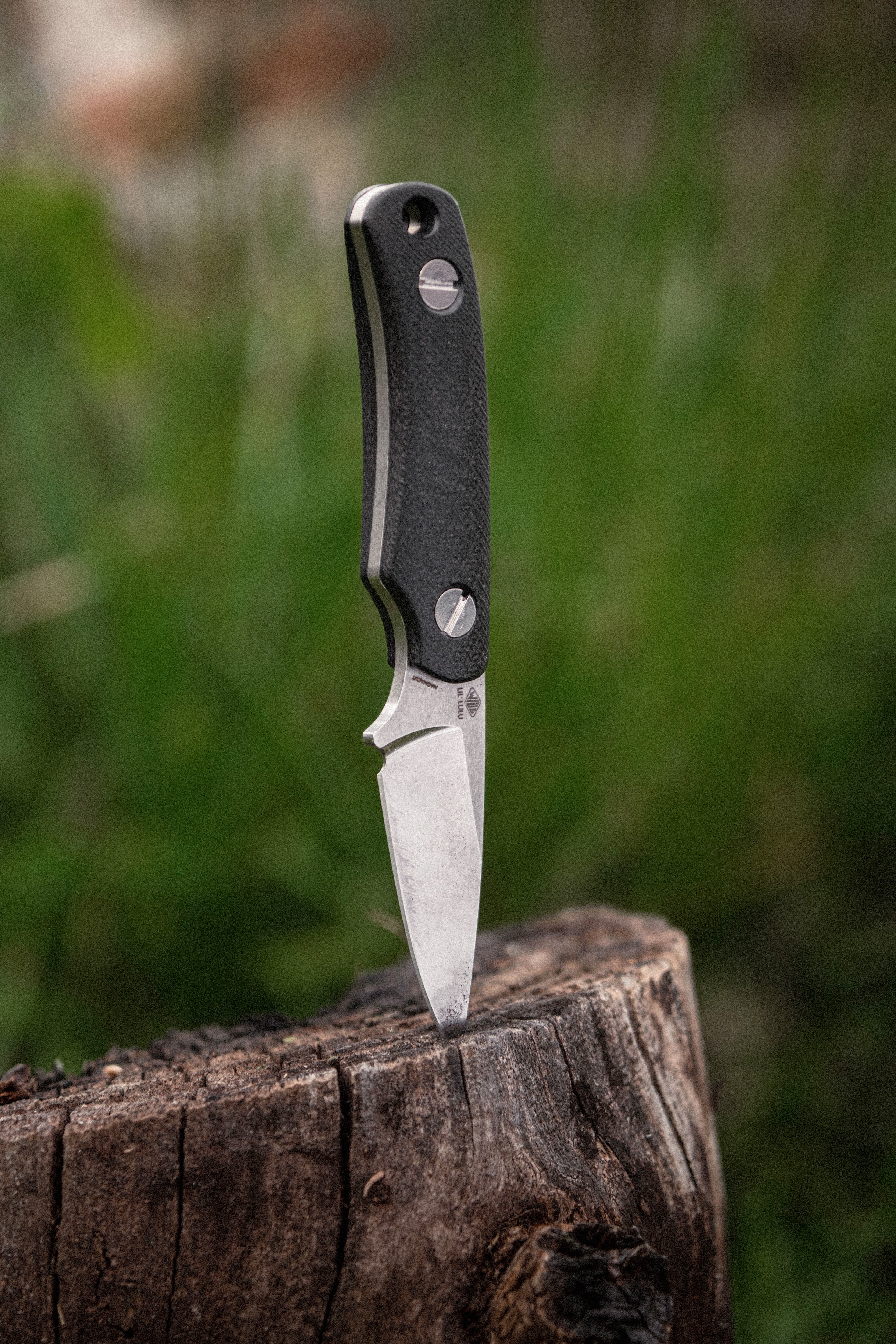
CPM MagnaCut is a game-changer in the world of knife steels, and it’s a big reason why the Little Lulu punches way above its weight class. Designed by Larrin Thomas—a metallurgist with deep roots in both science and the knife world—MagnaCut was engineered from the ground up specifically for knives. Larrin wanted a steel that could balance wear resistance, toughness, and corrosion resistance without the usual compromises. What he ended up creating was a stainless powder metallurgy steel that delivers exceptional edge retention and durability, all while laughing in the face of rust.
One of the most impressive things about MagnaCut is how well it balances the holy trinity of knife steel properties: hardness, toughness, and corrosion resistance. Traditional stainless steels tend to sacrifice toughness for corrosion resistance or lose edge retention. But MagnaCut threads the needle. It has ultra-fine carbides thanks to the CPM (Crucible Particle Metallurgy) process, which means it can hold a razor-sharp edge longer, resist chipping, and still be easy to maintain. In a compact, fixed blade like the Little Lulu that is built for day-in, day-out EDC tasks, that kind of steel is exactly what you want in your corner.
For us at Knafs, using MagnaCut in the Little Lulu was a no-brainer. It supports the knife’s mission: be small, scrappy, and ready for anything. Whether you’re out hiking, opening boxes, or whittling by a campfire, you’re carrying a steel that’s at the top of its game—designed by a knife nerd for knife nerds. And yeah, that’s exactly our vibe.
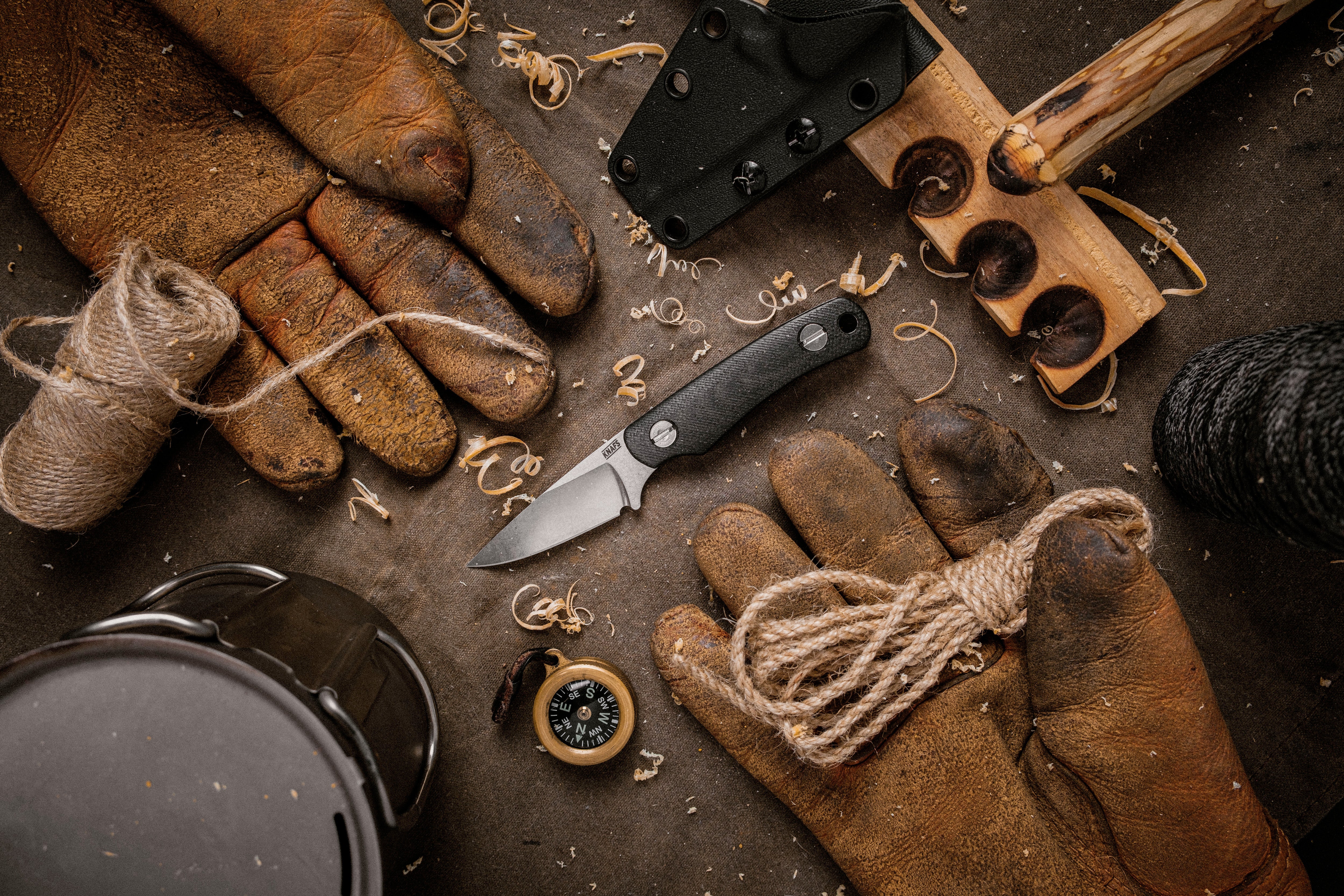
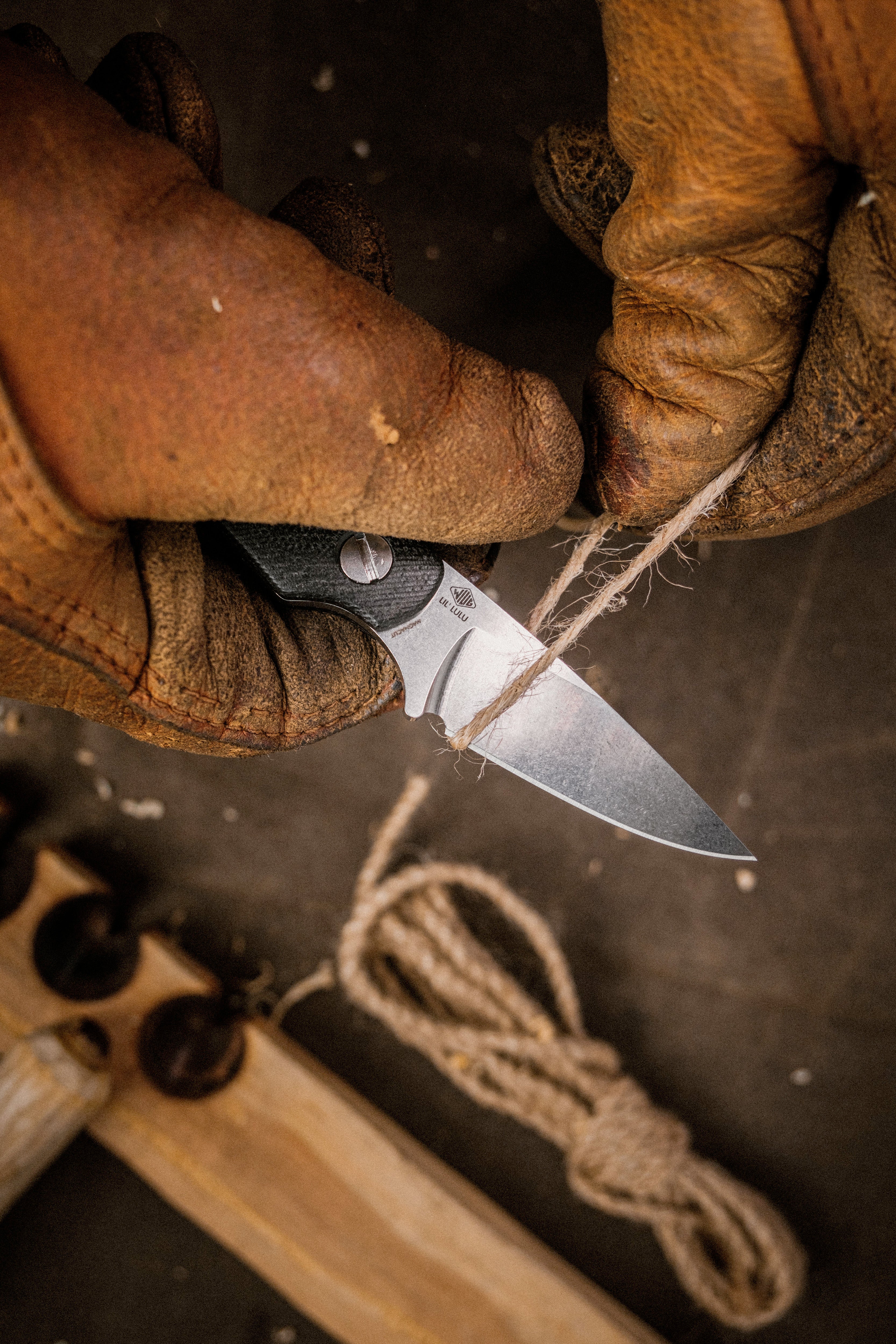
The Little Lulu may be small, but don’t let that fool you--it’s a powerhouse in a compact package. With a 1.9" blade and an overall length of just 5.2", this fixed blade is purpose-built for low-profile, everyday carry. It slips easily into your pocket, neck knife rig, or backpack without hogging space or weighing you down. Whether you’re cracking open boxes, cutting cordage, or carving up kindling, the Little Lulu is ready for it all, without announcing itself like a full-size survival blade.
This knife was born from real use, specifically, long hours in the Amazon jungle with too few tools and too many whittling projects. That experience helped us dial in the size to hit a sweet spot: small enough for fine work, but large enough to be genuinely useful. The handle is designed to give you solid grip and control but shows up big when you need it.
The Little Lulu isn’t here to replace your big bushcraft blade, it’s here to complement it. Think of it as your trusty sidekick: fast, agile, and always on hand for the everyday moments where precision matters more than brute force.
The Little Lulu is the first knife we’ve ever made in-house at Knafs—and yeah, we’re still not over it. It’s the result of three years of dreaming, learning, and finally pulling the trigger on our own CNC mill. We teamed up with our buddy Alan (a manufacturing engineer by day, garage mad scientist by night) and went all in on figuring out the whole process: milling, grinding, sourcing, heat treating, sharpening, assembling. We built a tiny knife ecosystem and started making blades ourselves—from scratch. Every detail of this knife carries our fingerprints, and the amount of love and grit in this thing is hard to overstate.
So… is it Made in USA? Technically, no. It’s “Made in USA of Domestic and Foreign Parts.” That’s the legal way to say: we did all the hard stuff here, but thanks to some super strict FTC standards (think “all or virtually all” of the parts made in the U.S.), we can’t claim it. Let's break that down, according to the parts on this knife:
•Steel: MagnaCut steel is currently made in USA. However, the parent company Crucible went through bankruptcy and is now owned by the French company Erasteel. Some of the processing on powder metallurgy steel happens in Sweden. This does not meet the "all or virtually all" standard of "Made in USA." However, the steel is rolled, laser cut, milled, ground, stonewashed, and laser engraved in the USA. This is a qualified claim of "Made in USA of Domestic and Foreign Parts."
•Hardware: Sourced from McMaster-Carr (a big 'ol American company) and made in China. The screws and standoffs are not Made in USA.
•Micarta: Sourced from Masecraft, an American company that sources micarta assembled in the USA from domestic and foreign parts. Masecraft told us the components (resin and linen fabric) come from three different countries. This is a qualified claim of "Made in USA from domestic and foreign parts."
•Kydex: sourced from Knife Kits, an American company selling Kydex, a thermoplastic product. Here's what we learned about their origin claim: KYDEX® Thermoplastic sheet cannot be stated as “Made in USA”. As with most plastic materials, there are some components that cannot be sourced in the USA and have to be purchased from foreign sources. For example, tin stabilizer is a common component which has not been mined and smelted in the US since the late 1980’s, early 1990’s. So critical components like this can only be obtained by foreign sources. What we can state is that KYDEX® Thermoplastic sheet is “Manufactured in USA with a minimum of 90% domestic content”.
•Sheath Grommets: made in China.
•Sheath Screws and Hardware: sourced from Ulticlip.
•Box: sourced from Flexpack in Woods Cross, Utah. Made in USA.
We have tried very, very hard to trace the supply chains on every part included on this knife. It's absolutely globalized, and we learned that "all or virtually all" of the parts of the Little Lulu are NOT made in USA. We made this knife ourselves. We watched the steel cut in Syracuse, Utah. We loaded parts into machines we own and tried not to breathe micarta dust. We shipped to Idaho for heat treat, and we surface ground in Springville, Utah. We assembled and sharpened in our shop in Clearfield, Utah. Our American blood, sweat, tears, hopes, and wild dreams are in this knife.
CPM MagnaCut is a game-changer in the world of knife steels, and it’s a big reason why the Little Lulu punches way above its weight class. Designed by Larrin Thomas—a metallurgist with deep roots in both science and the knife world—MagnaCut was engineered from the ground up specifically for knives. Larrin wanted a steel that could balance wear resistance, toughness, and corrosion resistance without the usual compromises. What he ended up creating was a stainless powder metallurgy steel that delivers exceptional edge retention and durability, all while laughing in the face of rust.
One of the most impressive things about MagnaCut is how well it balances the holy trinity of knife steel properties: hardness, toughness, and corrosion resistance. Traditional stainless steels tend to sacrifice toughness for corrosion resistance or lose edge retention. But MagnaCut threads the needle. It has ultra-fine carbides thanks to the CPM (Crucible Particle Metallurgy) process, which means it can hold a razor-sharp edge longer, resist chipping, and still be easy to maintain. In a compact, fixed blade like the Little Lulu that is built for day-in, day-out EDC tasks, that kind of steel is exactly what you want in your corner.
For us at Knafs, using MagnaCut in the Little Lulu was a no-brainer. It supports the knife’s mission: be small, scrappy, and ready for anything. Whether you’re out hiking, opening boxes, or whittling by a campfire, you’re carrying a steel that’s at the top of its game—designed by a knife nerd for knife nerds. And yeah, that’s exactly our vibe.
The Little Lulu may be small, but don’t let that fool you--it’s a powerhouse in a compact package. With a 1.9" blade and an overall length of just 5.2", this fixed blade is purpose-built for low-profile, everyday carry. It slips easily into your pocket, neck knife rig, or backpack without hogging space or weighing you down. Whether you’re cracking open boxes, cutting cordage, or carving up kindling, the Little Lulu is ready for it all, without announcing itself like a full-size survival blade.
This knife was born from real use, specifically, long hours in the Amazon jungle with too few tools and too many whittling projects. That experience helped us dial in the size to hit a sweet spot: small enough for fine work, but large enough to be genuinely useful. The handle is designed to give you solid grip and control but shows up big when you need it.
The Little Lulu isn’t here to replace your big bushcraft blade, it’s here to complement it. Think of it as your trusty sidekick: fast, agile, and always on hand for the everyday moments where precision matters more than brute force.

Vídeo
Entradas de blog
The Great Pocket Knife Fidget Factor: Why Mechanical Tactility Rules Modern EDC Culture
Discover why the pocket knife fidget factor is essential to EDC culture. Learn how mechanics, acoustics, and tactile feedback turn your knife into the ultimate tool.
EDC Gear Audit: Ditch the Dead Weight
Is your pocket clutter weighing you down? Run an EDC gear audit to ditch dead weight, identify your carry archetype, and build a functional, lightweight setup.
Made, Not Bought: Why DIY EDC Gear Modification is the New Modern Craft Movement
Discover why DIY EDC gear modification is the new modern craft movement. Learn how customizing your pocket tools empowers ownership, creativity, and self-reliance.