

Imagine your favorite pocket knife. Now imagine it twenty years from now. Is it the same knife if you’ve replaced the scales, swapped the screws, and sharpened the blade five hundred times? This is more than a philosophical riddle; it’s the reality of high-level knife ownership. Most people treat knives like disposable tools. When the handle gets ugly, the blade gets chipped, or the action gets gritty, they toss it in a junk drawer and buy a new one. Learning proper care for your knife, and investing in pocket knife customization can help preserve your tool for the long haul. Otherwise, you lose the broken-in feel and the personal history that only comes with time and use.
By embracing the right to repair and utilizing modular designs like the Knafs Lander, you can create a forever knife that evolves with your style while remaining a high-performance tool through proper maintenance and pocket knife customization.
The Philosophy of Own Your Knives
The modern consumer landscape is often designed to keep you out of your own gear. Many knife brands actively discourage disassembly, and some even go as far as to void your warranty the moment you back out a pivot screw. At Knafs, we believe that if you bought it, you own it—all of it. We flip the script by encouraging you to take things apart.
Understanding the why behind disassembly is the first step in the journey of pocket knife customization. It’s not just about aesthetics or deep cleaning; it’s about understanding the mechanical soul of your tool. When you see how the pivot, liners, and detent ball interact, you become a better user. You learn to feel when a knife needs a drop of oil or when a screw has vibrated loose from a week of hard cutting tasks.

The Tool Kit Essentials
To begin your journey into pocket knife customization, you need the right gatekeepers to your knife’s internal mechanics. Using cheap, soft-metal drivers from a bargain bin is the fastest way to strip a screw and ruin your afternoon. We recommend high-quality tools like the Knafs Bit Driver paired with Wiha bits.
Specifically, you need to know your Torx bit sizes for knives. Most modern folders, including the Lander, rely on a specific trio:
- T6: Commonly used for pocket clip screws and some handle scales.
- T8: The industry standard for most handle screws and occasionally the pivot.
- T10: Typically reserved for heavy-duty pivot assemblies.
Before you start any operation, set up a dedicated workspace. The Knafs Tool Burrito acts as a surgical tray, keeping your tiny screws from rolling off the table and into the abyss of your carpet. Organization is the difference between a successful mod and a pile of useless parts.
Pocket Knife Customization as Evolution
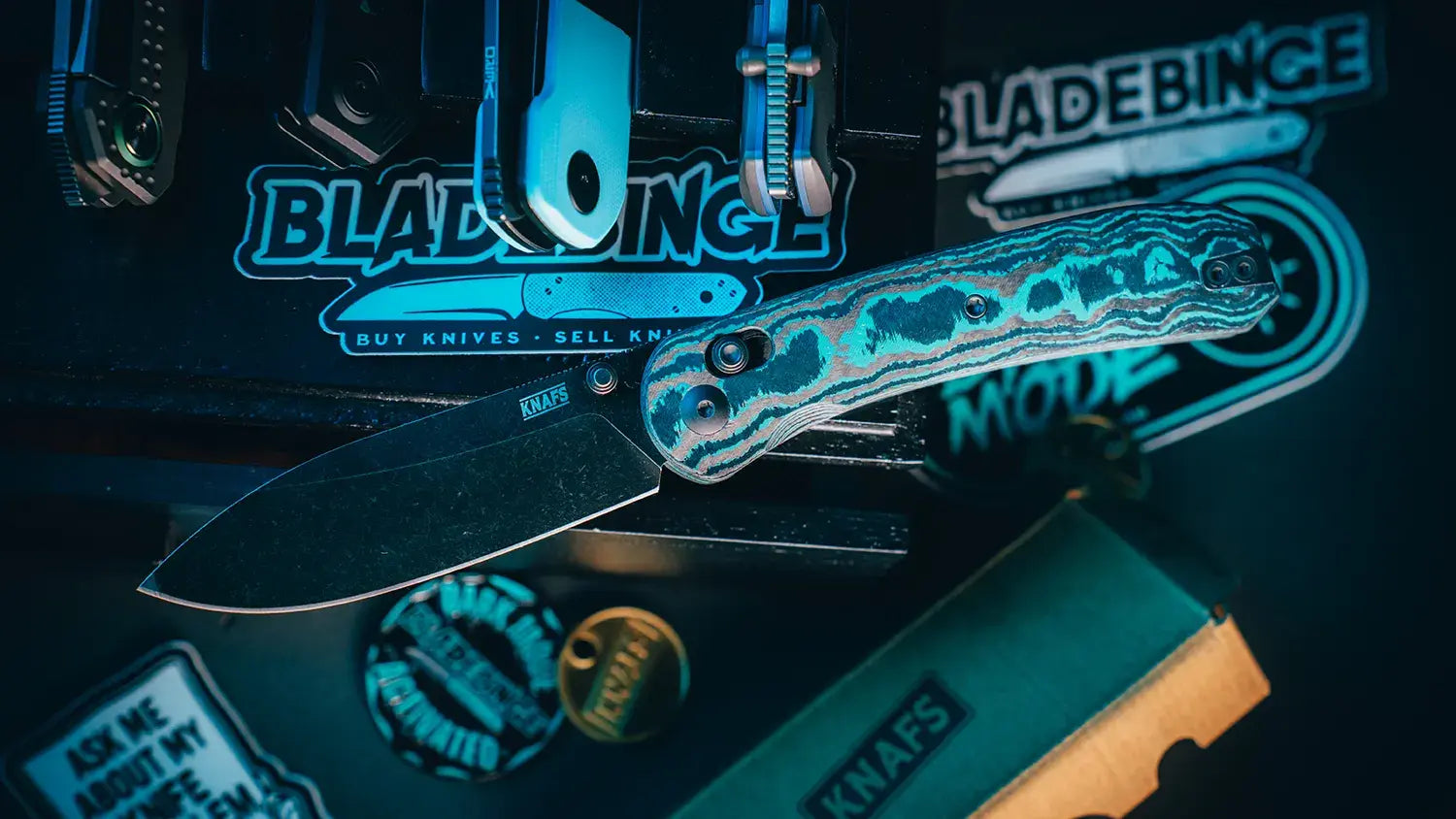
A knife should be more than a cold piece of steel; it should be a reflection of your personality. Custom scales are the easiest way to refresh a knife without the expense of buying an entirely new tool. This modularity allows the knife to grow with you. Perhaps this year you prefer the rugged look of desert tan, but next year you want something more colorful so you don’t miss it when you set it down on a counter or workspace.

How to Swap Scales on Knafs Lander
The Lander was designed specifically with the modding community in mind. While most knives require a full teardown just to change the handle color, the Lander features a fast and easy scale swap system. You do not even have to take the whole knife apart to change its look.
If you’re looking for a pocket knife disassembly guide for beginners, the Lander is the perfect starting point because of its simplified architecture. Learning how to swap scales on Knafs Lander involves these basic steps:
- Remove the screws on the show side and the clip side.
- Pop the scales off while leaving the liners and blade assembly intact.
- Snap on your new scales and replace the screws.
Because Knafs released the open-source scale files for the Lander, the possibilities for pocket knife customization are literally infinite. You are not limited to what we sell on our shelves. You can download those CAD files and take them to a local maker space or 3D printing shop. This allows you to create scales that are unique to your city, your favorite sports team, or even your own hand-drawn artwork. Many enthusiasts consider the Lander the best pocket knife for 3D printing scales because the geometry is specifically optimized for additive manufacturing.
Material Science and Aesthetics
Choosing the right material is a core part of the pocket knife customization experience. Each material offers a different tactile and visual result:
- G10: A high-pressure fiberglass laminate that is incredibly durable and resistant to chemicals. It is the workhorse of the knife world.
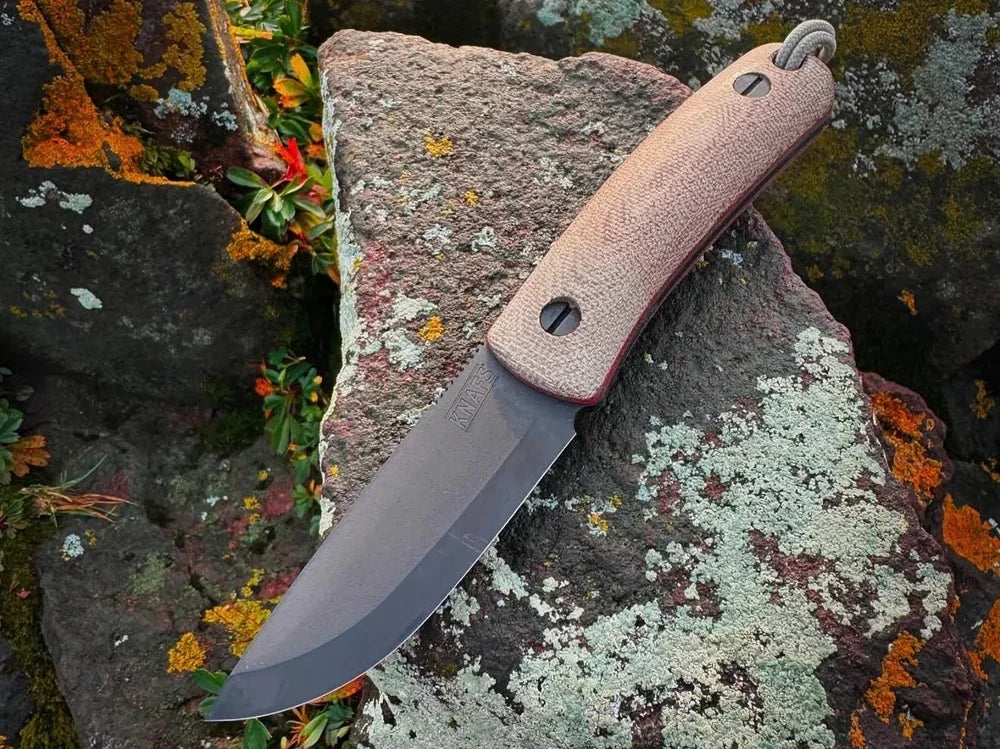
- Micarta: Often called the duct tape of the plastics world, Micarta is made from layers of fabric or paper soaked in resin. It provides excellent grip even when wet. One of the most satisfying aspects of this material is the patina development on Micarta. Over time, the oils from your skin will darken the material, creating a unique, weathered look that tells the story of your adventures.
- 3D-Printed Scales: These offer infinite creativity. Whether you want a glow-in-the-dark handle or a complex geometric texture, 3D printing is the frontier of modern pocket knife customization.

Don’t overlook the small details. Hardware accents like titanium thumb studs or colored barrel spacers can make a massive visual impact. These are the jewelry of the knife world, allowing for subtle color coordination that ties the whole build together.
Why Steel Composition Matters in Pocket Knife Customization
While handle scales provide the personality of your tool, the blade steel is the engine that drives its performance over decades. For those focused on long-term pocket knife customization, selecting a high-performance super steel like S35VN or MagnaCut is a strategic investment. S35VN is celebrated for its incredible toughness and ease of sharpening, making it a reliable companion that won’t chip under pressure. On the other hand, MagnaCut has revolutionized the industry by offering a virtually "impossible" balance of high wear resistance and extreme corrosion resistance.
Choosing these premium steels ensures that your blade can withstand thousands of sharpening cycles and various environmental exposures without failing. When you understand the metallurgy behind your gear, pocket knife customization moves beyond simple aesthetics and into the realm of professional-grade tool engineering, ensuring your Ship of Theseus remains sharp enough for the next generation.
The Forever Maintenance Routine
To keep a knife for decades, you need to move beyond the mindset of only sharpening it when it is dull. You need a proactive Knafs Lander maintenance schedule. A knife that is properly cared for will outlast its owner.
Deep Cleaning and Debris Removal
Pocket lint is the silent killer of knife actions. Over time, fibers from your jeans mix with factory grease to create a gritty paste that slows down the deployment of your blade. Use a shop rag and compressed air to regularly blast out these pocket lint gremlins.
When you do a full teardown, pay close attention to the pivot area. This is where a pocket knife disassembly guide for beginners becomes essential. Lay your parts out in the order they were removed. Clean the liners and the blade tang with isopropyl alcohol to remove old gunk before applying fresh lubrication.

Lubrication and Tuning
Lubrication is a science, not a more is better situation. Applying too much oil will actually attract more grit and accelerate wear. A single drop of specialized knife oil on the bearings or washers is usually all you need.
Once reassembled, you may need to perform a blade centering fix. If the blade is leaning toward one side of the handle, it can rub against the liners and damage the edge. To fix this:
- Loosen the pivot and the handle screws slightly.
- Shift the scales in the opposite direction of the lean.
- Tighten the handle screws first, then the pivot.
The Art of the Edge
Sharpening is the most frequent maintenance task you will face. A great tip for beginners is the Sharpie trick. Use a black marker to color the edge of your blade before you start sharpening. This allows you to see exactly where the stones are removing metal, ensuring you’re hitting the factory bevel and not creating a new, uneven angle.
Your local environment should also dictate your maintenance. If you live in a high-humidity area like Florida, your pocket knife customization journey must include frequent oiling of the blade to prevent rust. If you are in the dry air of the Mountain West, you might focus more on keeping the pivot free of fine dust and sand.

The Knafs Advantage
At Knafs, we don’t just sell knives; we sell the entire experience of knife ownership. We believe in the right to repair because we want your gear to stay in your pocket, not in a landfill. Our approach to pocket knife customization is built on providing you with the roadmap and the parts to be your own knife tech.
From the Knife Poster—which serves as a giant, visual map of your tool's anatomy—to our comprehensive Lander rebuild kits, we provide every component needed to keep your tool in the game. We do not want you to buy ten different knives that you eventually forget about. We want you to buy one knife and make it yours ten different ways. This philosophy gives you a tool with a story and a soul, rather than just another SKU number in a collection.
Pocket knife customization is about more than just aesthetics. It’s about the bond between a person and their tools. When you know how to swap scales on Knafs Lander, how to fix the centering, and how to maintain the edge, the knife becomes an extension of your hand. It becomes a reliable partner for your daily tasks, your weekend projects, and your outdoor adventures.

Building Your Legacy
We’ve explored why owning your knife matters, how customization keeps the fidget factor alive, and the maintenance steps that ensure your blade survives for decades. A knife is not a static object; it’s a platform for your life's work. It’s a canvas where you can express your style and a mechanical puzzle that rewards your attention. It’s also just really handy to have!
When you engage in pocket knife customization and consistent maintenance, you aren’t just fixing a tool; you’re building a legacy. You’re creating an heirloom that carries the marks of your use and the choices of your design. Whether it’s the specific shade of the patina development on Micarta or the way the action feels after a perfect tuning, those details are yours.
The right to repair is a powerful concept. It restores the agency of the owner. In a world of planned obsolescence, having the best pocket knife for 3D printing scales or modular parts is a quiet act of rebellion. It says that you value quality, longevity, and the personal touch.
Ready to start your Ship of Theseus journey and explore the world of pocket knife customization? Grab a Lander 2 and a set of custom scales today and start building your forever blade.

Leave a comment
This site is protected by hCaptcha and the hCaptcha Privacy Policy and Terms of Service apply.