
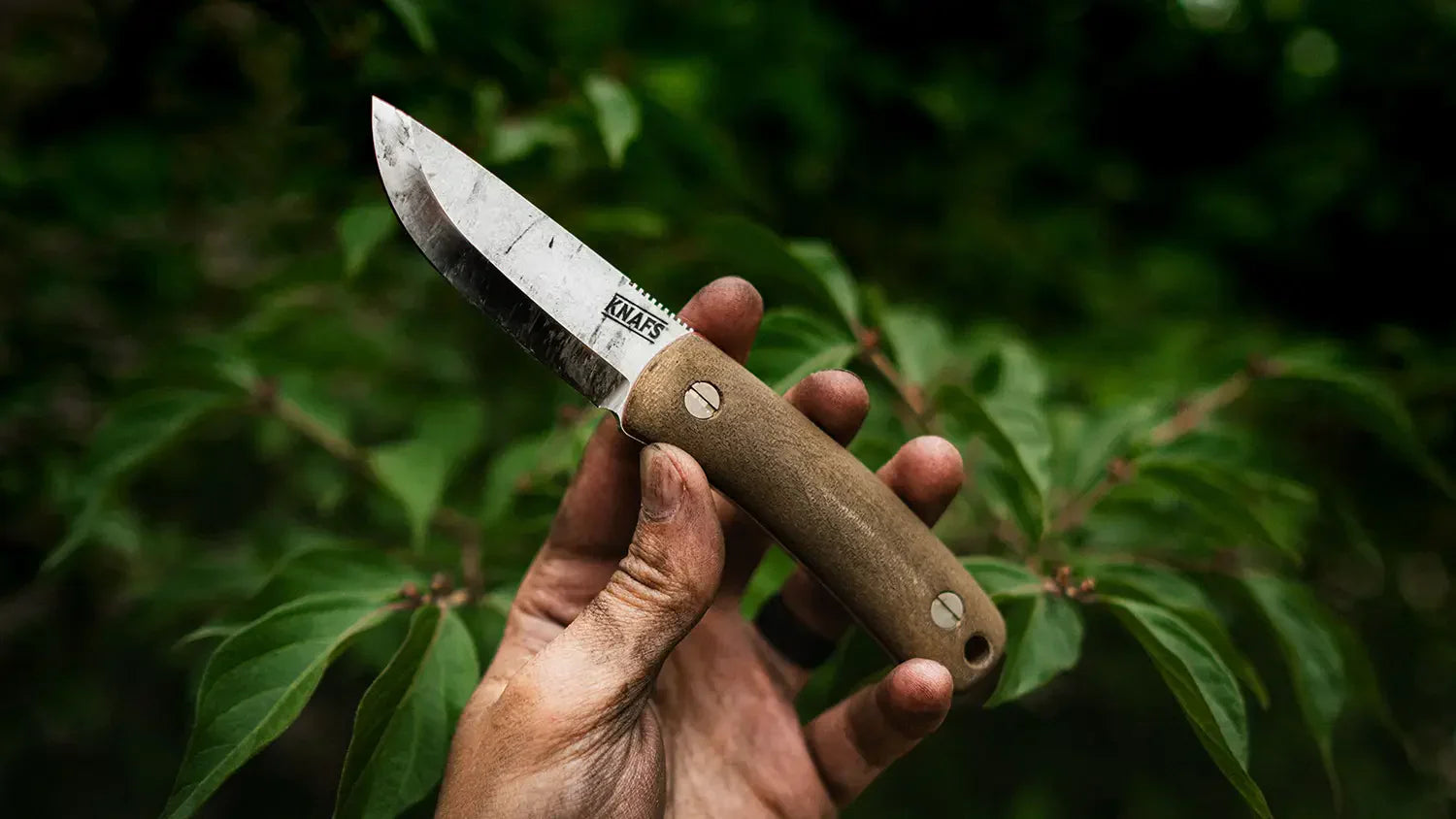
If you’ve ever reached a campsite, trail picnic table, or truck-tailgate kitchen and realized you forgot a real chef’s knife, you already know the problem. A pocket folder can absolutely save dinner, but only if it’s the right folder and you treat it like a food tool instead of a pocket dump for lint, grease, and yesterday’s sandwich crumbs. That’s the real question behind the best pocket knife for food prep: not just “Can it cut?” but “Can it slice cleanly, stay sanitary, and survive wet, acidic, on-the-go cooking without turning your meal into a maintenance project?”
For adventurers, the answer is yes. The right EDC knife can do surprisingly good camp kitchen work if you pay attention to blade geometry, steel choice, handle security, and cleaning habits. That’s where Knafs fits naturally into the conversation. Knafs builds approachable, modular, easy-to-maintain knives that make more sense for real-world use than overly aggressive tactical folders, and several of their models are well-suited to food prep in the field. If you want to explore the brand, start with Knafs.
What Makes a Pocket Knife Good for Food Prep in the First Place
Not every knife that rides in your pocket belongs anywhere near your dinner. A blade that’s perfect for cardboard, rope, or campsite chores may be a frustrating mess on onions, peaches, cheese, or fish. Food prep asks different things from a knife, and those differences matter more outdoors because you don’t have a kitchen sink, dish soap station, or a backup knife drawer.
The biggest shift is that food wants slicing, not splitting. A thick blade with a chunky edge tends to wedge apart tomatoes, bruise herbs, and crush softer ingredients. A thinner blade with a refined grind moves through food cleanly and gives you more control with less force. That means less slipping, less tearing, and less frustration when you’re cooking on uneven ground or under a lantern.

Comfort matters too. Outdoor food prep often happens on a small cutting surface, a pan edge, or even a camp plate. A knife with a good grip and enough handle clearance keeps your knuckles from bashing the board every time you chop. A secure lock also matters when your hands are wet, greasy, or cold. Knafs leans into that practical middle ground with compact folders that are easy to carry, easy to hold, and easy to live with.
Why “EDC Knife” and “Food Knife” Aren’t the Same Thing
A lot of people ask, "Can you use an EDC knife for cooking?” The answer is yes, but only with the right expectations. An everyday carry knife is usually designed to be versatile, not specialized. It may cut boxes, open packages, trim cordage, and handle camp tasks, but food prep rewards a more deliberate shape and smoother edge.
If your knife has a robust tip, extra-thick stock, or a grind built for prying and durability over slicing, it’ll feel clumsy on food. That doesn’t make it bad. It just means you’re asking it to do a job that depends on finesse. The sweet spot is a compact folder with enough blade belly for rocking cuts, enough edge geometry for glide, and enough stainless resistance to survive wet ingredients.
That’s why Knafs models like the Lulu family and the Lander series show up in camp-kitchen conversations so often. They’re not pretending to be chef’s knives. They’re EDC tools that can step into food prep duty without making a scene.

Geometry Is the Real Secret
When people debate the best pocket knife for food prep, they often focus on steel first. That’s important, but geometry usually matters even more. A sharp blade with the wrong grind can still feel like a wedge. A good grind with decent steel can feel dramatically better than expected.
For food, flat grinds are often a great place to start because they thin the blade behind the edge and reduce drag through produce and proteins. Scandi-style grinds can also work beautifully for slicing, especially on simpler camp tasks where a clean, controlled edge matters more than fancy slicing dynamics. In the Knafs lineup, the Lulu and Little Lulu are strong examples of slicey geometry that makes outdoor prep feel less like punishment and more like cooking.
A useful way to think about it is this: a pocket knife for food should cut like a knife, not split like a hatchet. If the blade geometry feels like it wants to open the apple instead of slice the apple, you’re in the wrong category.
Flat Grind vs Scandi Grind for Camp Cooking
The flat grind vs Scandi grind debate shows up constantly in knife circles, and both can make sense for adventure cooking depending on the task. A flat grind is often a little more versatile for mixed food prep because it slices cleanly, handles thinner ingredients well, and can feel less aggressive through soft produce. A Scandi grind can be outstanding for controlled cutting and clean slicing, especially if you like the feel of a simpler, more direct edge.
For camp use, the key is that either grind should be thin enough to avoid wedging. A thick work knife with a coarse edge will drag through carrots, onions, apples, and cured meats in a way that feels clumsy. A thinner slicing-oriented blade is what you want when you’re making dinner after a long hike and don’t want to fight every ingredient.
This is one reason Knafs users often gravitate toward models like the Lulu. The design language is friendly, but the geometry is serious enough to do real work. If your goal is one knife that can live in a pocket and still help with meal prep, the grind is a bigger deal than a lot of buyers realize.

Blade Shape: Belly, Tip, and Knuckle Clearance
Blade shape matters almost as much as grind. A generous belly can be very useful for food prep because it supports slicing motions and gives you more usable cutting edge. A clip-point profile can also work well because it often gives a nice balance of control and access.
Straight-edged shapes like some Wharncliffe patterns can be excellent for certain tasks, but they may feel less natural for food prep if you’re trying to do more traditional slicing cuts on a compact camp board. Knuckle clearance matters too. If the blade and handle geometry force your hand too low, you’ll find yourself clipping the cutting surface every few cuts.
That’s where Knafs designs such as the Lander 2 or Lander 3 can be compelling. Their hand feel and locking setup make them practical, confident tools for tasks where control matters. The point isn’t that one shape wins forever. The point is that food prep rewards a blade that feels like it belongs over a cutting board instead of a blade that only wants to live in a gear pouch.
Which Knafs Model is the Best Pocket Knife for Food Prep?
If you want a short list of knife characteristics to look for, here’s the practical version:
- Thin, slicey blade geometry
- A stainless steel that won’t panic around wet ingredients
- A secure lock for wet or greasy hands
- A handle with enough texture for control
- Easy disassembly or easy cleaning access
- A shape that supports slicing more than prying
That combination is why the Knafs Lulu, Lander 2, Lander 3, and related clip-point or Black Sheep-style options keep coming up in outdoor cooking conversations. They aren’t kitchen knives in the formal sense, but they’re much closer to kitchen-friendly than a lot of hard-use folders. If you’re building a single-pocket setup for a camp trip, geometry should be at the top of the decision tree.

Steel Choice, Corrosion Resistance, and Why Food Won’t Wait for You
Food prep outdoors introduces moisture, acid, salt, and time pressure. That’s a nasty mix for the wrong blade steel. Tomatoes, lemons, onions, marinades, and raw proteins all create conditions that can expose weak corrosion resistance fast. If you’ve ever wiped a blade after slicing citrus and noticed discoloration, you know the frustration.
This is where stainless knife steels become more than a marketing term. For outdoor food duty, you want high resistance to staining and rust, plus enough edge stability to stay useful through a whole meal. Knafs uses several steels that make sense in this role, including S35VN, Nitro-V, and MagnaCut, each bringing a different balance of corrosion resistance, toughness, and edge performance.
Why MagnaCut Corrosion Resistance Matters So Much
MagnaCut corrosion resistance is a big deal for camp cooking because it helps reduce the maintenance penalty that comes with wet food. When you’re slicing tomatoes, rinsing a blade in the field, or packing up in humid conditions, you don’t want to baby the steel every ten minutes. MagnaCut was developed to improve the toughness-corrosion-edge retention balance that many knife users care about, and that makes it especially attractive for adventure-ready food prep.
In a food context, the benefit isn’t just about long-term durability. It’s about peace of mind. A blade with excellent corrosion resistance can handle acidic ingredients and moisture more gracefully, which means less babysitting and less risk of staining, pitting, or lingering metallic off-notes on food contact surfaces.
Knafs uses MagnaCut in the Lulu, which makes that model especially relevant for adventurers who want a knife that can transition from general outdoor use to camp meal prep without fuss.
S35VN and Nitro-V: Strong, Practical Stainless Choices
S35VN is another excellent option for outdoor food prep. It’s a high-end stainless steel known for a balanced blend of toughness, corrosion resistance, and edge retention. On a folding knife like the Lander 2, Lander 3, or Banter, it gives you a practical sweet spot: durable enough for general EDC, stainless enough for food duty, and dependable enough for repeated field use.
Nitro-V, found in the Baby Banter, is also worth mentioning because it offers very good stain resistance and sharpness retention. For a knife that may see wet foods, quick camp cleanup, and lots of pocket time, that combination is appealing. If you’re choosing a pocket knife that might occasionally become your dinner knife, stainless performance should be treated as a feature, not an afterthought.

The bigger point is simple. If you know your knife might cut food, especially acidic or salty ingredients, stepping up to premium stainless steel is worth it. Budget steels can work in a pinch, but they ask for more immediate cleanup and more discipline.
How to Keep a Pocket Knife Food-Safe in the Field
A knife can be mechanically excellent and still be a bad food tool if it’s dirty. Pocket lint, old oil, grit, and residue all matter. If you’re using a folding knife on food, your hygiene routine needs to change. This is where a lot of people get tripped up, because they think “washed enough” is the same as “food-safe enough.” It usually isn’t.
The good news is that field hygiene doesn’t have to be complicated. You just need a routine. Clean the blade, flush the pivot area, remove hidden residue, and use a lubricant that makes sense for incidental food contact. If you handle the knife right, food use becomes practical instead of questionable.
Pocket Knife Disassembly Hygiene Without Overthinking It
Pocket knife disassembly hygiene matters because the visible blade is only part of the story. The pivot, liners, washers, scales, and internal cavities can all hold grime. If the knife has ever lived in a pocket, pack, or tool bag, assume it contains lint and residue until you prove otherwise.
For field or pre-trip cleanup, start by fully opening the knife and wiping down every exposed surface. If the knife is designed for easy teardown, that’s even better. Knafs models that are modular or easy to disassemble make this much less annoying. Use a Knafs Shop Rag or clean cloth, then follow with isopropyl alcohol on the pivot-facing components if appropriate for the knife materials. That helps strip factory oil and accumulated residue before you reassemble.
The key is not to leave mystery grease hiding in the mechanism. If you can see or smell old oil, it’s not food-ready yet. Clean parts stay cleaner longer, and clean pivots keep you from serving garlic with a side of pocket fuzz.
Food-Safe Lubricant Choices That Make Sense
If a knife is going to touch food, the lube question matters. You do not want mystery petroleum residue where dinner should be. A food-safe knife lubricant, or at least a lubricant suitable for incidental food contact, is the safer direction. For many users, pure USP mineral oil is the simplest answer. It’s widely used in food-adjacent settings and is easy to apply lightly to pivot parts.
Some people also use food-grade fractionated coconut oil, but mineral oil is the more common and predictable choice for knife pivots. If you prefer the simplest maintenance setup, a small bottle of mineral oil and a clean cloth go a long way. You’re not trying to drown the mechanism. You’re trying to keep it moving smoothly without contaminating your meal.
This is also where mineral oil pivot lube comes in as a practical field solution. A tiny amount is enough. Too much lubricant attracts dirt, which defeats the purpose and makes future cleaning worse. Less is more.

The Cleaning Routine That Actually Works on Trail
If you want a straightforward checklist for food prep use, here’s the routine:
- Wipe the blade before and after food contact
- Remove visible food particles immediately
- Disassemble or open the knife as far as the design allows
- Clean liners, washers, pivot, and blade well
- Dry every part completely
- Reapply a tiny amount of food-safe lubricant
- Reassemble and test smooth operation before storing
That routine takes a few minutes, not a whole evening. It also makes a huge difference in whether your knife feels like a trustworthy camp tool or a greasy problem waiting to happen.
The nice part about Knafs designs is that they’re built with real maintenance in mind. Easy access, modular parts, and transparent design choices reduce the friction between “used on food” and “safe to use again.” That’s one reason Knafs fits the camp-kitchen niche so well.
Knafs Picks That Fit Real Adventure Cooking
If you’re looking for the best pocket knife for food prep, the winner won’t be one universal model for everyone. The right choice depends on whether you care more about slicey geometry, lock strength, stainless performance, or ease of cleaning. Still, a few Knafs patterns clearly make sense for this job.
The Lulu is one of the most obvious food-prep-friendly choices because it pairs MagnaCut corrosion resistance with a slicing-oriented approach that makes camp prep feel much more natural. If you want a compact knife that can move from trail chores to dinner duty without apologizing, that’s a strong contender.
The Lander 2 and Lander 3 are also compelling because they blend practical EDC ergonomics with reliable lockup and stainless blade options like S35VN. Their approachable design makes them easy to carry, and their easy-cleaning philosophy helps when you’re dealing with wet ingredients or shared campsite surfaces. The Lander 4 and Black Sheep-style crossovers are especially interesting when you want thin, slicey geometry and a full-hand grip that still feels manageable around a cutting board.
The Baby Banter deserves a mention too, especially for users who want a compact knife with Nitro-V stainless performance. It’s not pretending to be a kitchen knife, but it’s capable of handling fruit, sandwiches, trail cheese, and other food tasks when your kit needs to stay minimal.
What ties these together is not a single steel or lock. It’s the Knafs approach: practical, friendly, and not overly tactical. That may sound like a branding detail, but it matters. A knife you enjoy carrying is a knife you’re more likely to maintain, clean, and trust around food.
Final Takeaways for Choosing the Best Pocket Knife for Food Prep
The best pocket knife for food prep is the one that slices cleanly, resists corrosion, cleans easily, and feels safe in your hand when the campsite gets messy. That usually means a thinner grind, a sensible blade shape, a stainless steel with strong corrosion resistance, and a maintenance routine that includes proper cleaning and a food-safe lubricant.
If you’re cooking outdoors often, don’t settle for a folder just because it’s already in your pocket. Choose geometry that works for food, not against it. Choose steel that won’t punish you for touching wet ingredients. And choose a knife that you can actually clean well at the end of the night.
That’s why Knafs belongs in this conversation. With models like the Lulu, Lander 2, Lander 3, and related stainless EDC options, Knafs gives adventurers a real path to camp kitchen duty without carrying a dedicated chef’s knife. If your goal is to cook better outside with less gear, that’s a very smart place to start.

Leave a comment
This site is protected by hCaptcha and the hCaptcha Privacy Policy and Terms of Service apply.