
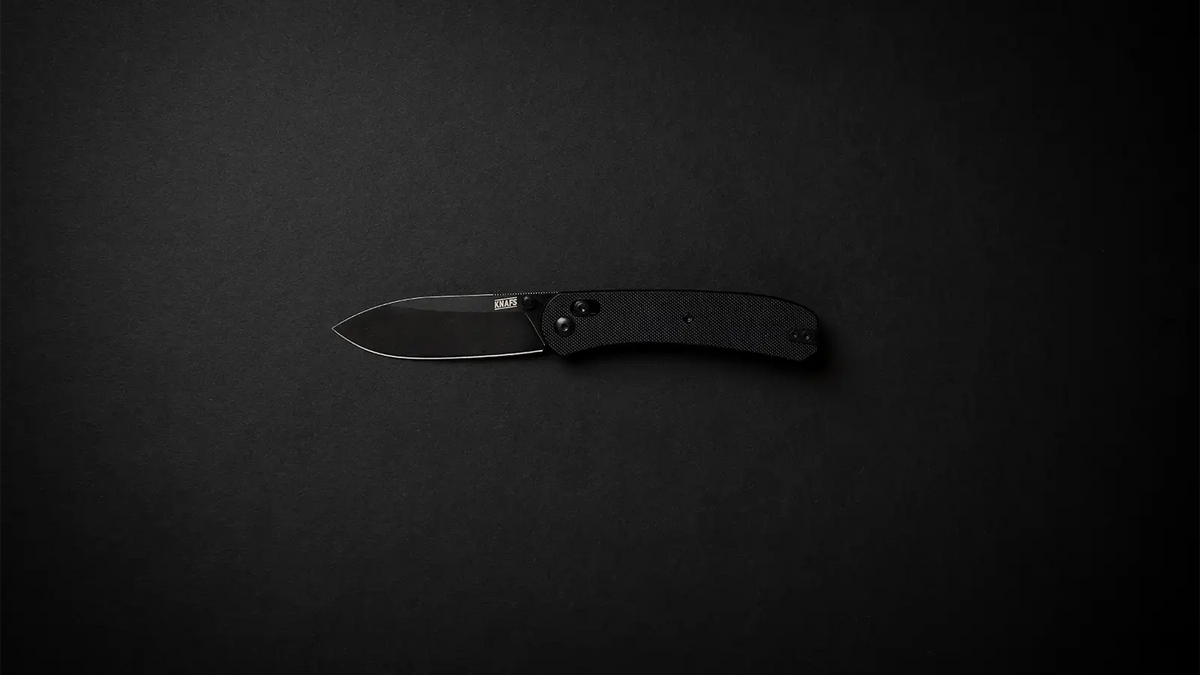
Click. Snap. Thwack.
If you’re a knife nerd, those three sounds hit like music to your ears. You don't even have anything to cut; there isn't a cardboard box, loose thread, or stray apple within a five-mile radius, and yet, you’ve flipped your Lander open and closed 47 times in a row. Your thumb is calloused from the repeated motion, and your hand is executing a masterclass in muscle memory for absolutely zero practical reason.
To normal folks, a knife is just a sharp wedge of metal you use to open Amazon packages or pry off paint lids. They don't get it. You try explaining the satisfying click of a tuned detent ball dropping into place, or the silky glide of ceramic bearings, and they look at you like you just tried to explain quantum physics in sign language.
Let's be real about the math of knife ownership:
- 20% cuttin’ stuff
- 15% looking at how cool it is
- 65% fidgeting with it
Sound about right? Yeah, we know. We’re the same.
The truth is, pocket knife fidget factor, that perfect, addictive combo of snappy snap, buttery smooth drop-shut action, and crisp acoustic feedback, is just as important as how sharp the edge is. It’s where precise mechanical engineering meets pure, unadulterated desk-side stress relief. Let's break down why we physically cannot stop flipping these stupidly awesome tools.
The Anatomy of the "Crisp Action"

What actually makes a knife feel amazingly satisfying to open? It isn't magic, though Ben might try to tell you otherwise (hi mom!). It's really just microscopic tolerances, tight pivot geometry, and way too many prototypes tested on our kitchen tables. Now, we’re about to get a teensy weensy bit technical with the knife jargon, but rest assured you’ll be able to follow along!
Ceramic Bearings vs. Old-School Washers
If you want a blade that drops shut with a gentle breeze, caged ceramic bearings are the way (or as the Mandalorian would say, “This is the way”).
Phosphor bronze washers have their place. They're tough, they laugh in the face of pocket lint, and they're great if you're planning to pull a Shrek and live in a swamp. But ceramic bearings? That’s next-level buttery smoothness. They cut down pivot friction so much the blade feels like it's gliding on fresh grease.
The Detent: Why Your Knife Doesn't Stab You In the Pocket
Ever wonder why your folder doesn't randomly open in your jeans and ruin your day? The detent is why. It's a tiny ceramic or steel ball pressed into the lock bar that snags into a matching hole drilled into the blade tang.
When you push the thumb stud, you're building up thumb force to pop that ball out of its socket:
- Too shallow: The action feels mushy, sad, and weak.
- Too deep: You need thumb muscles like a powerlifter just to break the blade free.
- Just right: The ball pops loose, launching the blade out like a tiny steel rocket.
You press, the detent gives, and SNAP. Pure mechanical bliss. Groovy, baby!
Choose Your Deployment Weapon
How you launch the blade totally changes the fidget vibe.
Thumb studs are classic and snappy. Opening holes let you pull off the "middle-finger spidey-flick", which looks pretty flippin’ slick and feels ridiculously satisfying. Front flippers require a weird little thumb-roll technique (think vintage Zippo lighter), but once your muscle memory kicks in, you feel like a pocket-tool wizard. Plus, ambidextrous, smooth pocket knife deployment action means lefties get to join the fidget party too.
Tuning Your Pivot for Maximum Fidgetability

You don't have to just accept whatever pivot action shipped from the factory. Honestly, sitting at your desk with a Torx bit, micro-adjusting a pivot screw while staring intently at a blade gap is practically a rite of passage for knife nerds.
It’s a balancing act between two terrible extremes:
- Way too tight: The action feels like dragging a cinderblock across wet concrete. Zero blade play, sure, but you practically need two hands and a crowbar to open it.
- Way too loose: The blade swings free and drops like a guillotine, but it wobbles side-to-side like a loose baby tooth. Not great.
Tuning a pivot comes down to micro-fractions of a millimeter. You want to tighten the screw just enough to kill all side-to-side blade play, but leave it loose enough that the second you clear the lock bar, the blade glides shut with almost no resistance.
The Desk-Toy Phenomenon & Stress Relief

Most of us aren't out bushcrafting shelters or skinning elk on a Tuesday afternoon. We’re sitting in swivel chairs, driving kids all over the place, or trying to stay engaged in a Zoom call.
Lucky for us, work-from-home culture turned EDC gear into the ultimate fidgets.
You’re trying to draft an email, and before you know it, your thumb has instinctively done five consecutive flips on your Lander. Or it’s 2:00 PM, your brain is total mush, and instead of pouring a four-shot espresso, you flick a crossbar lock a dozen times just to feel something.
Then a package actually shows up at your door. You finally use the edge to slice some tape, the one thing the knife was technically built for, and immediately go right back to mindlessly flicking it while reading news feeds. Having something mechanical in your hands just keeps you grounded. It's a nice little physical break from staring at glass screens all day.
One quick note on fidget etiquette, though: read the room.
Flicking a blade open with a thunderous THWACK during a silent office meeting or in a public waiting room is a speedrun to having Karen from HR call security. Save the high-speed deployment clicking for your home office, or when you’re hanging out with fellow knife dorks who actually want to hear the acoustics.
Designed by Knife Nerds: The Knafs Advantage
Ben Petersen literally built his entire career and reputation on designing knives with addicting deployment action. He knows he talks a lot about it (and Ben brought maps, because, Ben), but the obsession is real. We don't just throw parts together and hope they feel good; we obsess over every single detent angle and lock surface until it feels right.
Take the Lander 2 and Lander 3 setups. They feature super-smooth clutch-style locks and tuned ceramic bearings engineered specifically for effortless, ambidextrous deployment. You can disengage the lock, flick the blade open, let it drop shut, and repeat until your finger muscles get a workout.
We build the best fidget-friendly EDC pocket knives because we want gear that brings genuine joy every single time you use it. Whether you're actually slicing through 50 feet of thick packaging material or just flicking the blade while brainstorming your next big project, the action should feel incredible.
Keep On Flipping

At the end of the day, a pocket knife is a tool. But who says a tool can't be fun? The acoustics, the detent break, and that smooth pivot feel are what turn a basic piece of cutting steel into an addicting daily companion.
A great blade engages both your hands and your mind. Obsessing over tiny action tolerances isn't crazy—it's what makes knife culture so ridiculously entertaining.

Leave a comment
This site is protected by hCaptcha and the hCaptcha Privacy Policy and Terms of Service apply.